The Economic Status of Second hand Clothing Business in Global Market
The global second-hand clothing industry has evolved from a small charity thrift business into a cornerstone of the global textile...
read more






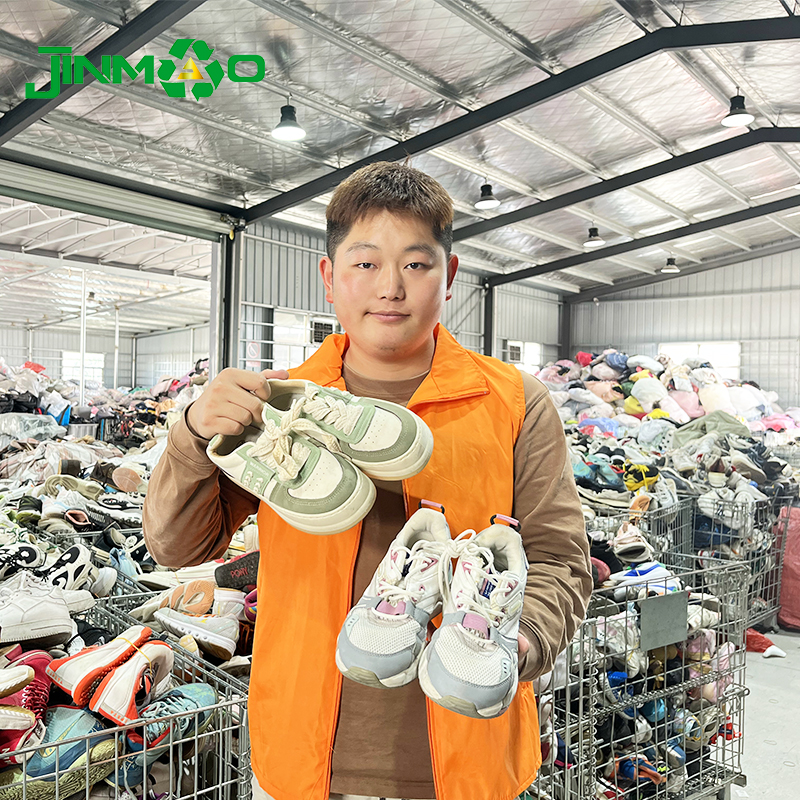
The East African second-hand shoe market has rigid demand, high profits and stable growth. It is one of the most potential markets in Africa. Its core covers Kenya, Tanzania, Uganda and Ethiopia. It is driven by low-cost demand + brand preference + mature distribution network, with broad room for development.
1. Market size and demand basis
The scale of the East African footwear market in 2025 will be about US美元3.1 billion, an annual increase of 3.47%, and second-hand shoes will account for more than 40%. The core driver is the gap between the economy and supply and demand.:
Purchasing power support: East Africa’s per capita GDP is generally less than US 22,000, 90% of the population has a daily income of less than US115, the price of new shoes (US220-50) is high, and second-hand shoes (US22-10) have become just in demand.
Weak local manufacturing: the footwear industry is backward, has insufficient production capacity, and relies on imports. Second-hand shoes fill the gap in the low-end market.
Demographic dividend: East Africa has a population of more than 400 million, and 60% are under 25 years old. Young people are keen on sports shoes and casual shoes, and second-hand brand shoes (Nike, Adidas) have a high premium.
Core hub: The Gikumba Market in Nairobi, Kenya, is the largest second-hand shoe distribution center in East Africa, with a single-day circulation of more than 50,000 pairs, radiating many surrounding countries.
2. Core categories and profit margins
Sports shoes/casual shoes (the hottest): accounting for 60%-70% of demand, Grade A (90% new, no damage) wholesale price 1-3 US dollars, retail price 5-15 US dollars, gross profit 300%-500%; brand models (such as Nike) have a higher premium.
Leather shoes (just needed): For business/daily use, Grade A/B sells well, suitable for urban office workers, with a gross profit of 200%-400%.
Slippers /sandals (walking volume): The low price is just in demand, the unit price is 1-3 US dollars, suitable for stalls and rural markets, with small profits and quick turnover.
Winter boots (seasonal): The highlands of Kenya and the mountains of Ethiopia are in high demand in winter, and the premium for thick warm boots is high.
3. Core advantages and growth drivers
Low penetration rate and large gap: the supply of second–hand shoes is much smaller than the demand. A 40-foot cabinet (about 10,000 pairs) is sold out within 1-2 weeks of arrival in Hong Kong, and the supply is in short supply.
The distribution network is mature: mainly open-air markets, street stalls, and small shops, e-commerce (such as Kilimall) has risen rapidly, and online and offline linkage has accelerated turnover.
Friendly policies: low tariffs (about 15%) in Kenya, Tanzania, etc., no import bans, and second-hand trade is encouraged to reduce the cost of living.
Cost-effective is king: consumers give priority to price + appearance, brand second, Grade A/B is the most popular, and Grade C (slight wear and tear) can go to the low-end market.
4. Development prospects and conclusions
The East African second-hand shoe market is expected to have a CAGR of more than 12% in the next five years, and its scale is expected to exceed US8800 million in 2030. The core opportunities are:
Category focus: the main sports shoes + casual shoes, with a small number of leather shoes and slippers, taking into account profit and walking volume.
Hierarchical pricing: Grade A (high-end market / e-commerce), Grade B (open-air market /town), Grade C (village /stall) are fully covered.
Channel sinking: expand from core cities to second- and third-tier towns and villages, covering 80% of the unmet population.